- 2026-6-24
- 未分類
- Why Packaging Mobility Matters in Logistics はコメントを受け付けていません
Upgrade Your Packaging Now with a Heavy-Duty Carry Handle for Cartons
A single carry handle can transform a bulky carton into an effortlessly portable package. This simple yet revolutionary cutout or attached strap redistributes the load, turning your fingers into a secure lifting point. By integrating directly into the carton’s design, it eliminates the need for awkward hugs or risky fingertip grabs, making every carry safer and more confident.
目次
- 1 Why Packaging Mobility Matters in Logistics
- 2 Key Materials Used for Box Carrying Solutions
- 3 Anatomy of a Functional Carton Grip System
- 4 Industry-Specific Design Variations
- 5 Compliance and Safety Standards for Box Grips
- 6 Innovations in Detachable and Reusable Handle Technology
- 7 Cost-Effectiveness of Integrated vs. Retrofit Handling Aids
- 8 Common User Errors and Troubleshooting Tips
- 9 Future Trends in Carrying Convenience for Packages
- 10 What Exactly Is a Portable Grip for Cardboard Boxes?
- 11 Key Features to Look for When Selecting a Box Handle
- 12 Simple Steps to Attach and Use Your Carton Grip Correctly
- 13 Practical Benefits of Adding a Handle to Heavy Boxes
- 14 How to Choose the Right Box Carrier for Your Specific Needs
Why Packaging Mobility Matters in Logistics
In logistics, packaging mobility directly impacts handling efficiency, and a carry handle for cartons is a primary enabler. Without an integrated handle, workers must resort to awkward grips or use both hands, slowing down picking, repacking, and loading processes. A well-placed handle allows for single-handed carton transport, which frees the other hand for tasks like opening doors or scanning labels. This single change reduces physical strain on personnel, decreasing fatigue-related errors and potential workplace injuries. The mobility afforded by handles also facilitates faster stacking and repositioning within tight storage aisles. Notably, a handle that is poorly positioned can negate these mobility gains by unbalancing the load during carry. Ultimately, a functional carry handle transforms a static box into an ergonomic, mobile unit that workers can move with speed and control, directly improving throughput in any logistics operation.
The Role of a Reliable Grip in Box Transport
A reliable grip transforms a precarious lift into controlled transport. When a carry handle for cartons provides non-slip texture or ergonomic contouring, your hand maintains constant tension without micro-adjustments that strain muscles. This direct force transfer keeps the box stable against your leg during movement, eliminating the wobble that causes collisions with doorframes or pallet edges. For multi-stop deliveries, a secure grip follows a clear sequence:
- Fingers lock into the handle channel without pinching
- Weight centers directly below the shoulder joint
- Natural wrist alignment prevents torsional slip
Each element ensures the carton stays a solid extension of your body, not a hazard waiting to drop.
How Handles Reduce Product Damage and Worker Fatigue
Ergonomic handles on cartons directly lower drop rates by replacing precarious fingertip grips with a secure, balanced hold, which prevents crushing or shock damage to contents. This stable carry stance also reduces strain on forearm and back muscles, minimizing worker fatigue during repetitive lifting. The handle’s design distributes load weight evenly, cutting the cumulative tension on joints and enabling safer, faster transfers without compensatory awkward motions that lead to product loss.
Handles reduce product damage by stabilizing the grip and lessen worker fatigue by balancing weight distribution, eliminating dangerous compensatory movements in logistics handling.
Key Materials Used for Box Carrying Solutions
Carry handles for cartons are typically manufactured from polypropylene (PP) or polyethylene (PE), chosen for their high tensile strength and flexibility. Corrugated cardboard itself, when die-cut as an integral handle, relies on the flute direction for load-bearing capacity. For heavy loads, reinforced handles use woven polyester straps or steel wire cores embedded in plastic. A short inline Q&A: What primary material property determines handle suitability? Elongation at break is critical—too low causes snapping under weight, too high leads to permanent deformation and sagging. Additives like UV stabilizers or antistatic agents are sometimes blended into the plastic to extend handle life in specific environments.
Polypropylene vs. Recycled Cardboard: A Durability Comparison
When comparing durability for handle performance, polypropylene vs. recycled cardboard reveals a clear winner for repeated use. Polypropylene handles resist tearing, moisture, and fatigue, supporting up to 30 pounds without warping. Recycled cardboard handles degrade over time, absorbing humidity and fraying at stress points. Why does polypropylene outperform recycled cardboard for long-term handling? Its plastic structure flexes under weight rather than cracking, making it ideal for multi-trip cartons, whereas recycled cardboard suits only single-use, dry environments.
Biodegradable and Eco-Friendly Attachment Options
For eco-conscious packaging, biodegradable attachment options for carton handles prioritize materials like compostable PLA (cornstarch-based) or recycled paperboard, which break down fully in industrial composting. These attachments use water-based adhesives or mechanical interlocking (no plastic clips), ensuring the entire carton can be recycled or composted as a single unit. Q: Do biodegradable handles compromise strength? A: Modern designs match conventional plastic handles for heavy loads (up to 20 kg), using reinforced paper cords or layered cardboard matrices that resist tearing during transport. They are ideal for brands eliminating petroleum-based waste.
Anatomy of a Functional Carton Grip System
The anatomy begins with the die-cut handle aperture, a precise oval or rounded slot punched through the carton’s top panel. Its edges are smooth and slightly reinforced by a folded flap that tucks under, creating a comfortable, load-bearing lip for your fingers. The surrounding carboard is scored in a pattern that distributes weight outward, preventing tear-out when the carton swings. Your grip finds the handle’s sweet spot only when the aperture aligns with the center of gravity, eliminating that awkward tilt. Finger slots are strategic—two parallel cuts let you hook two to four fingers, spreading pressure across the hand. The real test comes in a grocery bag: your knuckles brush the neighboring milk carton, but the handle holds, its anatomy proving that a simple hole and folded lamination can turn a box into a carrying tool.
Cut-Out Handles vs. Attached Straps: Core Differences
Cut-out handles and attached straps diverge fundamentally in load distribution and structural integration. A cut-out handle, formed directly from the carton board, creates a single-material grip system that relies entirely on the board’s tensile strength and perforation geometry; it inherently reduces available stacking surface. An attached strap, typically plastic or fabric, is a separate component fastened to the carton, transferring the load through rivets or adhesive to the panel. The core sequence of differentiation is:
- Locating the applied stress: cut-out handles concentrate force along the board’s edge, risking tear; attached straps distribute tension across a broader bonded area.
- Engaging the hand: cut-out handles require a finger-thickness slot, limiting glove clearance; attached straps offer a flexible loop that accommodates varying hand sizes.
- Manufacturing alteration: cut-out handles require only a die-cut modification; attached straps demand secondary assembly, increasing component count.
This distinguishes a permanent aperture from a user-added load-bearing interface.
Ergonomic Curves and Weight Distribution Mechanics
Ergonomic curves in a carton grip system are designed to follow the natural contours of the palmar grip, preventing acute pressure points on the median nerve. This contouring directly influences weight distribution mechanics by directing the load’s center of gravity through the metacarpal arch. A precisely curved handle transforms a concentrated, shear-heavy force into a distributed, compressive load across the thenar eminence and finger pads. This optimized load path minimizes localized tissue deformation and reduces the muscular torque required to stabilize the carton, ensuring that the grip’s structural geometry passively manages the moment arm of the suspended weight.

Industry-Specific Design Variations
Industry-specific design variations for carton carry handles are dictated by product weight and user environment. For heavy bulk goods, such as pet food or flour, a reinforced die-cut handle with a plastic grip insert is essential to prevent the paperboard from tearing and to distribute pressure across the hand. Conversely, beverage multipacks often employ an integral locking tab handle that folds from the carton sidewall, eliminating the need for separate materials while maintaining structural rigidity during wet condensation exposure. A subtle but critical shift occurs in e-commerce packaging where a dual-slot hand hole is preferred over a single opening, allowing the logistics worker to easily re-grip the box throughout its supply chain journey. For fragile electronics, manufacturers integrate a foam-padded web handle that suspends the carton’s weight away from its delicate contents.
E-Commerce Shipping: Lightweight Plastic Inserts
For e-commerce shipping, lightweight plastic inserts for carry handles are engineered as slim, die-cut polypropylene or polyethylene components that retrofit onto standard corrugated cartons. These inserts integrate a reinforced aperture for hand-hold access, ensuring the handle bears tension without tearing the box flap. Their low mass minimizes dimensional weight surcharges, a critical factor for parcel carriers. The installation sequence follows a clear protocol:
- Align the insert’s flange against the carton’s inner flap face.
- Fold the insert’s outer tab through a pre-cut slot from inside to outside.
- Press the tab flat against the outer carton surface, locking it securely for lifting.
Beverage and Food Packaging: Moisture-Resistant Features
In beverage and food packaging, moisture seeping from chilled cartons or hot liquids can weaken cardboard handles, causing catastrophic breakage. Moisture-resistant handle coatings, such as laminated polyethylene or wax-based barriers, prevent liquid wicking into the fiberboard. Handles on milk cartons or soup containers feature reinforced die-cuts that channel condensation away from the grip zone, ensuring the carry arch retains its tensile strength even when surfaces are wet. This engineering keeps the handle dry to the touch and structurally sound during transport from fridge to table.
Moisture-resistant coatings and condensation-channeling die-cuts preserve handle integrity in wet packaging environments.
Heavy-Duty Industrial Boxes: Reinforced Load-Bearing Handles
Heavy-duty industrial boxes require reinforced load-bearing handles engineered to withstand extreme weight and repetitive use. Unlike standard carton handles, these are constructed with steel or high-density plastic cores, fully encapsulated within the box wall to prevent tear-out. The handle’s attachment points are often riveted or welded to an internal metal bracket, distributing stress across the structural frame. A clear sequence for integration involves:
- Selecting handle material rated for the box’s maximum payload (e.g., 250+ kg).
- Cutting or molding precise slots that accommodate the handle’s reinforced shank.
- Securing the handle with tamper-proof fasteners or ultrasonic welding to the box substrate.
This design prevents handle separation during heavy lifting, maintaining integrity under dynamic loads.
Compliance and Safety Standards for Box Grips
The molded plastic handle must withstand a static load test far exceeding a carton’s typical weight, ensuring the integral anchor points inside the corrugated board do not tear under repeated use. I’ve watched warehouse workers trust these grips to swing heavy boxes, relying on a non-slip texture and radiused edges that prevent hand injury during quick pulls. A poorly designed handle might pass a lab test yet fail in humid storage, as moisture degrades the adhesive locking the grip to the carton. The real standard is not the certification label but the silent, dependable strength that lets a handler transfer a stack of cartons without ever checking the handle first.

ASTM and ISTA Guidelines for Tear Resistance
When checking box grips, ASTM and ISTA guidelines for tear resistance set the baseline for durability under real-world handling. ASTM D624 measures how a handle material withstands propagating tears, while ISTA 3A simulates actual shipping stress to predict failure points. Both standards require consistent thickness and reinforcement at stress zones. Your carton handle must survive repeated tearing forces, not just a single pull test. Focus on die-cut edges that align with these test protocols to avoid sudden rips during lifting, ensuring the grip won’t give out when the box is fully loaded.
Child Safety and Sharp Edge Regulations
For box grips, child safety and sharp edge regulations demand that every carry handle’s surface be free of burrs, jagged cuts, or pointed corners that could cut small hands. Handles must be radius-tested to eliminate any pinch or laceration risk, with all slots or cutouts smoothed to a minimum curve. The material’s edge finish is critical—jagged plastic or metal flash is unacceptable, and any die-cut opening must pass a finger-probe test to prevent snags. Soft, rounded profiles are mandatory, not optional, to ensure a safe grasp for children who may pull on the handle.
- All handle edges must have a minimum radius of 0.5 mm to prevent cuts
- Slotted handles must pass a 5 mm probe test to eliminate pinch points
- Material flash or burrs are automatically rejected during quality inspection
Innovations in Detachable and Reusable Handle Technology
Innovations in detachable and reusable handle technology for cartons now focus on snap-fit ergonomic clips that lock into pre-cut slots, eliminating the need for adhesives or tools. These handles are molded from durable, flexible polymers, allowing them to be removed intact after opening the carton, cleaned, and snapped onto a new container. The design often incorporates a contoured grip with load-distributing ribs to prevent strap cutting, even with heavy contents. Some variants feature a rotating base that adapts to the carton’s tilt, reducing wrist strain. This reusable system saves material waste and offers a consistent, comfortable carrying experience across multiple shipments.
Snap-Fit Clips for Multipurpose Corrugated Boxes
Snap-Fit Clips for Multipurpose Corrugated Boxes transform standard cartons into units with integral handles, bypassing tape or adhesives. To install, align the clip’s tabs with pre-cut slots on the box flap and apply firm pressure until they lock into the corrugation channels. This creates a secure, detachable handle system that supports up to 30 pounds. The clip can be released by pressing the release tabs, allowing the handle to be removed for flat storage or reuse on another box. The orientation of the clip’s spine should match the box’s flute direction for optimal load distribution.
- Insert the clip’s front prongs into the box’s top slots.
- Press the rear tabs down until they snap into the inner flute layer.
- Test the handle by lifting the box in one smooth motion.
Magnetic or Adhesive Temporary Attachments
Magnetic or adhesive temporary attachments let you snap or stick a handle onto a carton for a single trip, then peel it off to reuse later. These systems rely on strong neodymium magnets or industrial-grade pressure-sensitive adhesives that hold firm during transport but release cleanly without tearing the box surface. For instance, a reusable handle with a magnetic pad attaches instantly to metal-reinforced cartons, while adhesive-backed handles work on plain cardboard by gripping fibers temporarily. Magnetic or adhesive temporary attachments eliminate the need for permanent fixtures, making them perfect for fragile items where you want zero residue or damage.
Q: Do magnetic or adhesive temporary attachments leave any sticky residue on cartons?
A: Nope—quality adhesive handles use a low-tack formula that peels off cleanly, and magnetic ones leave zero mess since they only need a metal surface to grab.
Cost-Effectiveness of Integrated vs. Retrofit Handling Aids
For carton handlers, integrated carry handles are typically more cost-effective than retrofit aids over the long term. Integrated handles, formed during carton manufacturing, eliminate the per-unit cost of applying separate handles, reducing materials and labor. Retrofit aids, while cheaper upfront, incur recurring expenses for adhesive applicators and manual placement, slowing workflow. Although retrofit solutions suit low-volume or custom runs, high-volume operations save significantly with integrated designs due to faster packing lines and zero consumable costs. The initial tooling investment for integrated handles pays off rapidly through reduced per-unit handling costs, making them the superior choice for sustained carton handling efficiency.
Manufacturing Expenses for Die-Cut Cardboard Openings
Manufacturing expenses for die-cut cardboard openings are directly influenced by the complexity of the cut pattern and the number of stations required on a flatbed die cutter. Simple, single-ended handle cuts require minimal tooling and faster cycle times, keeping per-unit costs low. In contrast, intricate, multi-panel openings or those requiring additional creasing for ergonomic folding increase tooling wear and press time, raising manufacturing expenses. The cost-per-thousand openings is optimized when the die design is tailored to the carton’s fiber direction, preventing tear-outs that waste material. These expenses are primarily fixed per run; retrofitting existing boxes with new die cuts incurs higher setup charges compared to integrating the opening into the initial blank design.
Retrofit Handle Kits: Upfront Cost vs. Long-Term Value

Retrofit handle kits present a lower upfront cost than fully integrated handles, but their long-term value depends on application volume and durability. The initial purchase price is attractive for low-quantity or trial runs, as no mold modification is needed. However, retrofit handle kits long-term value diminishes with high-volume use due to potential adhesion failures or alignment shifts on cartons. Over thousands of units, replacing failed kits or applying secondary reinforcement adds cumulative expense. A cost-per-handle analysis often reveals that integrated handles become cheaper per unit past a certain threshold.
- Lower initial investment suits small batches or variable carton sizes.
- Adhesive longevity can reduce value if cartons face moisture or weight stress.
- Labor for kit installation increases total cost over continuous production runs.
- No tooling changeover cost, but per-unit price stays flat regardless of volume.
Common User Errors and Troubleshooting Tips
A primary user error is failing to fully engage the handle’s locking tabs with the carton’s die-cut slots, leading to detachment under load. Ensure the handle is inserted straight and pressed firmly until a click is heard. Improper alignment, especially when the handle is twisted during insertion, creates weak points that tear the carton board. If the handle feels loose, check for crushed flap edges or misaligned slots; verify the carton thickness matches the handle’s specified range. For handles with a center reinforcement patch, do not force the patch into a slot—it must sit flat inside the carton. A common fix for carton box plastic handle handles that pull out is to pre-fold the handle crease 180 degrees to reduce spring-back resistance before assembly.
When handles fail, inspect the carton’s slot condition first, as crushed flaps from previous handling are the most frequent cause of grip failure.
Tearing at Corners Due to Off-Center Placement
If your carry handle for cartons consistently tears at the corners, the culprit is almost always off-center placement. When the handle isn’t perfectly aligned with the carton’s center of gravity, one side bears all the weight, creating acute stress at that corner. This imbalance turns a clean lift into a corner rip before the handle even engages fully. The fix is simple: measure the carton’s midline precisely, mark both insertion points, and align the handle’s base exactly to those marks. Q: Why do corners tear even when the handle feels secure? A: Because off-center placement fools your touch; the handle feels stable until load shifts, but the concentrated strain at the misaligned corner already started the tear from the first moment of lift.
Slippage on Smooth Surface Boxes
Slippage on smooth surface boxes occurs when glossy or laminated carton exteriors fail to provide sufficient friction for the carry handle. To counter this, ensure the handle’s adhesive pad is applied on a clean, dry surface free from dust or oils. If slippage still happens, switch to a handle with a high-tack adhesive or a textured grip backing designed for low-friction substrates. Press the handle firmly for 10–15 seconds during installation. For extreme cases, use a handle that wraps around the box edge, bypassing the smooth face entirely and transferring the load directly to the carton’s structural seams.
Future Trends in Carrying Convenience for Packages
The shopper, laden with grocery bags, reaches for a carton of soda. Tomorrow, that carry handle for cartons won’t be a flimsy plastic loop, but a rigid, ergonomic grip integrated into the carton’s board itself. As the box is heaved, the handle’s heat-sealed reinforcement prevents tearing, redistributing the heavy load. This evolution in future carrying convenience for packages means hands no longer ache from digging into side panels; the handle is ready, formed automatically during the carton’s die-cutting. Even a single large pizza box will have a small, built-in tab that creates a stable, offset handle, allowing a parent to carry dinner and a child’s craft project in one smooth motion, without shifting balance or risking a spill.
Smart Handles with Embedded Sensors for Tracking
Smart Handles with Embedded Sensors for Tracking transform the carry handle for cartons into an active logistics node. These handles integrate IoT-enabled strain gauges and accelerometers to log parcel stress during transit, while built-in ultra-wideband (UWB) chips broadcast precise location data. A paired mobile app alerts the carrier if the carton is mishandled, such as being tilted beyond 30 degrees. Real-time package monitoring becomes seamless, as the handle’s embedded GPS activates only upon lift detection to conserve power. Q: Can the sensors function if the handle is detached from the carton? A: No; the sensors rely on the handle’s mechanical load path to trigger, rendering them inert when unattached.
Self-Adjusting Straps for Variable Load Weights
Self-adjusting straps for variable load weights dynamically redistribute tension across a carton’s surface by integrating a spring-loaded or elastomeric core within the handle assembly. As the package weight shifts or increases, the strap autonomously tightens or loosens its grip on the carton flaps, maintaining a constant pressure threshold that prevents crushing lightweight loads while securing heavier ones. This adaptive tensioning eliminates the need for manual buckle adjustment between successive cartons of differing content densities. The system relies on a pre-calibrated resistance mechanism that responds to gravitational force alone, ensuring the strap contour never exceeds the carton’s compressive limit.
- Automatically compensates for sudden weight shifts during transit by micro-adjusting strap length.
- Eliminates user error in load evaluation, as the strap self-calibrates within a 5–25 kg range.
- Reduces carton corner deformation by distributing force across a dynamically varying contact patch.
What Exactly Is a Portable Grip for Cardboard Boxes?
Breaking Down the Basic Design of a Carton Handle
Common Materials Used in These Box Carriers
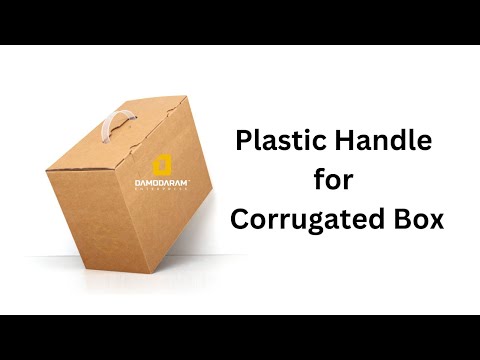
How This Accessory Transforms a Plain Box into a Portable Unit
Key Features to Look for When Selecting a Box Handle
Load Capacity and Weight Limits You Should Check
Attachment Methods: Adhesive, Slot-In, or Strap Designs
Ergonomic Shapes That Reduce Hand Strain
Simple Steps to Attach and Use Your Carton Grip Correctly
Preparing the Box Surface for a Secure Fit
Positioning the Handle for Balanced Lifting
Common Mistakes That Weaken the Handle’s Hold
Practical Benefits of Adding a Handle to Heavy Boxes
Reducing Risk of Dropping or Spilling Contents
Improving Comfort During Repetitive Carrying Tasks
Making One-Person Lifting of Bulky Packages Feasible
How to Choose the Right Box Carrier for Your Specific Needs
Matching Handle Type to Box Size and Weight
Determining If You Need a Reusable or Disposable Option
Testing Grip Comfort Before Buying in Bulk
pythonを学ぶならこちらの動画講座がおすすめです
Python 3 入門 + 応用 +アメリカのシリコンバレー流コードスタイルを学び、実践的なアプリ開発の準備をする
かなり長い講座名ですね。
わかりにくそうな感じがします。ですが、pythonの基礎からしっかりとわかりやすく教えてくれます。
また、きれいなコードを書くための方法についても
教えてくれるので、周りが「どうやってそんなコードを書いてるの?」
とびっくりされるようになるかもしれません。それからWebアプリケーション開発の基本的なテクニックについても
教えてくれます。なので、pythonを使ってwebアプリケーションを作ってみようと
思っている方にもおすすめです。値段は時期によって違います。
詳しくはこちらをご覧ください。
みんなのAI講座 ゼロからPythonで学ぶ人工知能と機械学習
この講座ではまずpythonの基礎を学びます。
次に人工知能について学んでいきます。そして最終的にはpythonを使って文字認識や株価分析ができるような技術力が身につくようになっています。
単純に教科書的なpythonを学ぶのではなく
仕事でも使えるスキルを身につけたい方におすすめの講座です。なのに値段は恐ろしいほど安いです。
時期によって値段は変動するので
詳しくはこちらをご覧ください。
Pythonで機械学習:scikit-learnで学ぶ識別入門
この動画講座は広島大学准教授の先生が担当しています。
機械学習が専門の先生です。すごく深い知識が身につきます。
大学の先生の講義って難しそうってイメージがあるかもしれません。でもそんなことはありません。
すごくわかりやすいです。pythonで機械学習のスキルを身につけたい方におすすめです。
値段は時期によって違いますが、かなり、良心的な価格になっています。詳しくはこちらをご覧ください。

関連記事:
 How the Right Casino Platform Enhances Your Gaming Experience
Focus Needed! Cloudflare
Ways to Ensure a Smooth Trailer Transfer Process in Delaware
The Role of Durable Power of Attorney in New York Estate Planning
All the Medications Midi Dietary supplements
Why Online Gaming Beats Land‑Based Casinos: An Expert Guide
How the Right Casino Platform Enhances Your Gaming Experience
Focus Needed! Cloudflare
Ways to Ensure a Smooth Trailer Transfer Process in Delaware
The Role of Durable Power of Attorney in New York Estate Planning
All the Medications Midi Dietary supplements
Why Online Gaming Beats Land‑Based Casinos: An Expert Guide